| Anemone |
|
|
|
| Written by Greg Hix | ||||||||||
| Friday, 13 July 2007 | ||||||||||
|
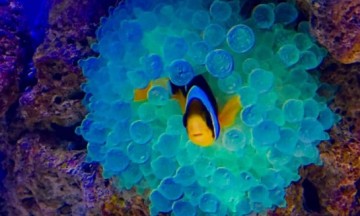
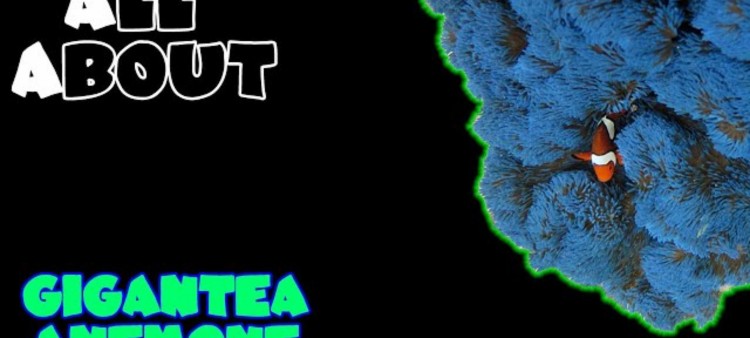
One of the most popular ideas for the novice marine aquarist is the thought of a colorful little clownfish, or pair of clownfish happily hunkered down in their anemone host. Anemonesby Greg Hix. However, as many find out, often the hard way, there is much more to successful anemone keeping than meets the eye. While this article won’t be a definitive study, it will hopefully give the reader an idea of what the most popular species are, and what requirements they have in order to thrive in the home aquarium. Anemones are variably considered to belong to the phyla Cnidaria (the “c” is silent), which refers to their stinging organs (cnidae) or Coelenterata, which means “hollow gut”, referring to their tube like morphology. There are many species ranging in size from the hydroid-like Aiptasia or glass anemone that has become the bane of many an aquarist’s existence to the huge carpet anemones, which can attain a diameter of about 6 feet. However, one thing all anemones have in common is the ability to sting their prey as well as neighboring corals with their powerful nematocysts. Reproduction can be asexual by budding, fission, or pedal laceration or sexual by males and females releasing gametes into the water column.
Specimen Selection Many aquarists attribute a large part of their success in anemone keeping to the acquisition of a healthy specimen. When selecting your anemone, let your eyes and common sense be your guidelines. A healthy anemone should be firm, full-looking, and open, as well as out in the open. If the specimen appears shrunken, or is “hiding” in the rockwork, it would be best to make an additional visit to see if it has perked up. Ask to see it eat and observe the presence, or lack of, a feeding response.; The food item should stick to the tentacles and be drawn into the mouth, which, when not feeding, should be closed.
The tentacles should not be deflated nor should the mouth be gapping.
Get to know the natural coloration of the species you have in mind. Look for a specimen that is nicely colored-up and isn’t dull or bleached in appearance. Also, beware of vibrant yellow or hot pink specimens, as they have been dyed, or sometimes even chemically bleached and dyed. These anemones will lose the color soon, and will likely perish due to stress.
After enough research and observation you will begin to recognize which anemones are dyed.
Aquarium Care All anemones require moderate indirect flow, which is fairly easy to provide. However, care must be taken to cover all pump and filter intakes, as many a roaming anemone has met its end by being sucked up and spat back into the tank in itty bitty pieces. Additionally, anemones require the stability of a mature reef-type system rather than a tank that has just completed its cycle. Bear in mind that anemones should be classified into three difficulty categories: difficult to keep, more difficult to keep, or REALLY difficult to keep. Though there are some exceptions, most anemones are zooxanthellate and require fairly intense lighting to truly thrive. In fact, anemones from the genus Condylactis (Condy anemones) should not be acquired unless the system is extremely well lit. T-5 fluorescents and metal halides are the best choices, although as mentioned, for Condies, metal halides are practically a must. Some keepers report that many species seem to acclimate more readily if there is a clownfish host in residence as the clowns may provide them with crumbs of food. However, it is more likely that clownfish will rob an anemone of food by continually moving it away from the anemone’s mouth. It is my experience that an anemone that is well fed by the aquarist will fare much better, especially during the acclimation period. Another thing to consider is that your anemone may not stay where you put it, and will wander around the tank looking for a spot that’s “just right”. This can be problematic in some systems, as the anemone will often sting other corals or anemones in its travels. Again, I’ve found that if the critter is well fed, it will tend to settle in much more quickly. Many anemones such as E. quadricolor (bubble-tips) will “tell” you how well fed they are. When hungry, the tentacles of many species become elongated, rather like “sweeper” tentacles, but a well-fed specimen will have bulbous tentacles. It should be noted that insufficient lighting may be the cause of tentacle elongation, however, if this is the case, the stalk will also attempt to reach toward the light and appear elongated as well. Silversides, squid, krill, mussels, or even frozen “multi” foods such as Formula One are all good anemone fare.
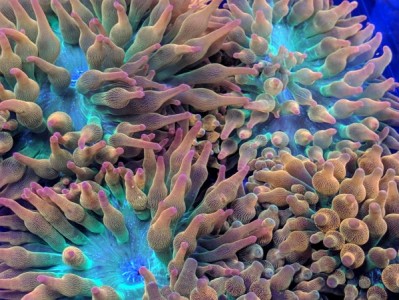
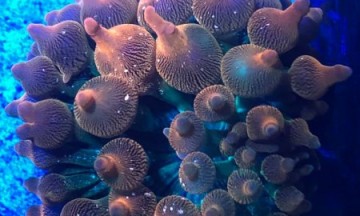
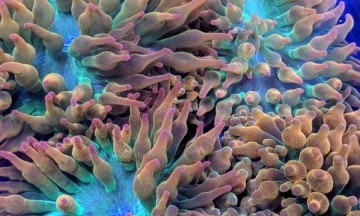
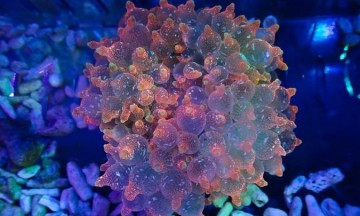
Commonly Available Species When choosing what species of anemone to keep, one must first consider the reason for keeping an anemone. Is it with a clownfish in mind? What size and type of tank will it be housed in? What will be its tankmates? The following is a list of the most commonly available species and their individual requirements. Entacmacea quadricolor (bubble-tipped anemone, BTA, bulb-tentacled anemone, corn anemone). Typical coloration is brown or green, sometimes pink or red (rose anemones). The tentacles usually have a bulb or bubble shape at or near the ends, although a hungry specimen will typically have elongated tentacles. Diameter is about 50mm to 400mm with a short, smooth column and small pedal base. The BTA prefers crevices in rockwork as anchor spots. Probably the most forgiving anemone to keep, the bubble tip can be kept under bright PC lighting. Many species of clownfish will host in the BTA, including A. akindynos, A. allardi, A. bicinctus, A. chrysopterus, A. clarkii, A. ephippium, A. frenatus, A. mccullochi, A. melanopus, A. omanensis, A. rubrocinctus, and A. tricinctus.
Entacmacea quadricolor.
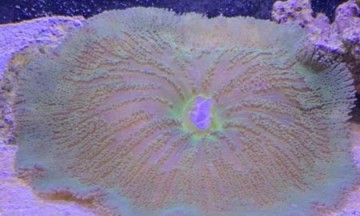
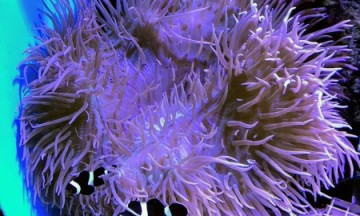
Stichodactyla haddoni (Haddon’s sea anemone, saddleback anemone, carpet anemone, or sand carpet). Tentacle ends can be green, yellow, gray, or rarely pink, giving the oral disc a variegated appearance, while the lower portions of the tentacles typically a drab yellowish or tan color. The oral disc is commonly 500 mm, rarely 800 mm in diameter with a yellowish to orange tentacle-free oral area 10-20 mm in diameter. Like most carpet anemones, this species generally requires a sandy area to sink its column into, but occasionally, a specimen may pick out a place in the rockwork. This anemone can pull rapidly and completely beneath the sand when disturbed, leaving its fish to hover over the sandy depression. Additionally, a carpet anemone’s tentacles are very sticky to the touch, and may adhere to human skin so strongly that they pull off the anemone. Although contact with them is painless, it can raise welts. If “grabbed” by this anemone, it is best to wait until the anemone releases your hand so as not to injure it by pulling off tentacles. Carpet anemones have been known to consume fish, and have a potent sting that can damage corals in their wanderings. Typical clownfish hosts include A. akindynos, A. chrysogaster, A. chrysopterus, A. clarkii, A. polymnus, and A. sebae.
Stichodactyla haddoni.
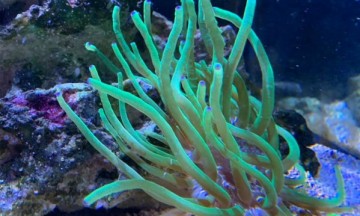
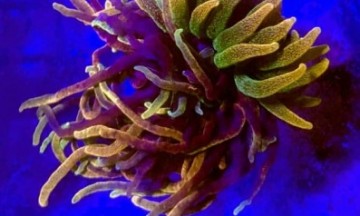
Heteractis crispa (long tentacle anemone, LTA, leathery sea anemone, sebae anemone or milk anemone). Very numerous (as many as 800), long (typically to 100 mm) tentacles which are evenly tapered to a point, are often tipped with pink or blue, occasionally yellow or green. The oral disc is usually brownish violet or gray, rarely bright green. The widely flared oral disc may exceed 500 mm in diameter, but is commonly 200 mm. The column, which is gray in color, and leathery in texture, is typically buried in sediment so the oral disc lies at surface of the substrate, although the pedal disc may be attached to branching coral. This species requires metal halide lighting in order to thrive. Clownfish hosts include A. akindynos, A. bicinctus, A. chrysopterus, A. clarkii, A. ephippium, A. latezonatus, A. leucokranos, A. melanopus, A. omanensis, A. percula, A. perideraion, A. polymnus, A. sandaracinos, and A. tricinctus.
Heteractis crispa
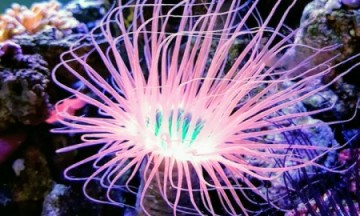
Macrodactyla doreensis(corkscrew sea anemone, long tentacle anemone, or LTA). Similar in appearance to H. crispa, but with longer and fewer tentacles, often, but not always, shaped in a corkscrew pattern. The oral disc is purplish-gray to brown, sometimes with a green cast and can reach a diameter of 500mm although it is typically considerably smaller. The tentacles are basically the same color as the oral disc, but the tips may be darker or lighter. The column is buried in the substrate, and its lower part is red to orange while the upper portion is a brownish color. This species has the ability to retract completely into the substrate. A fine substrate with a depth of at least 4 inches is required for this species since it is often found on muddy bottoms. The corkscrew anemone is another “sticky” species, and care should be taken not to injure it if touched. Clownfish host species include A. chrysogaster, A. clarkii, and A. perideraion.
Macrodactyla doreensis
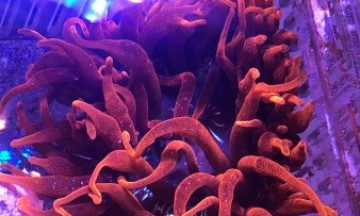
Condylactis gigantea(Condy anemone, Haitian anemone or giant golden anemone). This species has diverse color variations. The color of the column is usually brown to white and the long tapering tentacles may or may not have magenta, purple, or green tips. The tentacles may occasionally develop a bubble-like appearance to them. Its oral disc diameter can reach up to 400 mm, but a disc of about 100 mm is common in the home aquarium. It prefers to bury its base in the sand or into the crevice of a rock for protection. The Condy anemone has a reputation for moving around the tank and has a sting that can inflict grave damage to other anemones and corals. This species requires strong light and should never be acquired if a good metal halide lighting system is not in place. Since it is reported that the red-leg hermit crab is a natural predator of the Condy, they should not be included as tankmates. Unlike many other anemones, the Condy anemone does not have a relationship with any particular fish in nature, and it is rare for any type of clownfish or damsel to reside within them.
Condylactis gigantea
A final thought regarding hosting is that with the great success in the captive breeding of clownfish, these fish may never host in an anemone. Additionally, care must be taken to provide a large enough anemone for a clown or clown pair to host, as too small a specimen will likely be buffeted to death by the clownfish.
Conclusion While anemones are difficult to maintain in the home aquarium, if the requirements of any given species are met, and a healthy specimen is obtained, it is possible to keep and enjoy them for years. The absolute best advice I can give to anyone looking to keep anemones (or any new species) is research, research, and more research. Your critters will thank you for it! Bibliography Sea Anemone Field Guide to Anemone Fishes and Their Host Sea Anemones The Anemone FAQ (For tropical, clown-hosting anemones) Special Thanks: Thank you Pacific Reef for allowing photographs top be taken of their specimens. Photo Credit: Photos taken by Renee Coles-Hix unless otherwise noted.
| ||||||||||
| Last Updated ( Monday, 16 July 2007 ) | ||||||||||
| Next > |
|---|